











In any successful restaurant, the clatter of clean dishes signals a well-run operation. Proper dishwashing is more than just a chore; it's a cornerstone of food safety, customer satisfaction, and your business's reputation. While the basics might seem similar to washing up at home, the challenges in a professional kitchen—from high volume to strict health codes—demand a higher level of skill and precision. Learning how to wash dishes correctly is a fundamental skill that protects your patrons and your brand.
This guide will walk you through the essential techniques and standards for professional food service operations. From mastering the three-compartment sink to understanding advanced sanitization, you'll gain the knowledge needed to run an efficient, compliant, and safe dishwashing station. Let's empower your team with the practices that turn a simple task into a powerful tool for success.
Professional Dishwashing Standards and Methodology
Knowing how to wash dishes properly in a commercial setting requires a deep understanding of industry standards. Regulatory bodies, such as the FDA and local health departments set strict guidelines to prevent foodborne illnesses. The most common and accepted method is the three-compartment sink, a systematic process designed for efficiency and safety.
The Three-Compartment Sink Method
Here’s a step-by-step breakdown of the three-compartment sink method:
- Scrape and Pre-Rinse: Before washing, all dishes must be thoroughly scraped to remove leftover food. Use a spatula or scraper to clear plates into a compost or waste bin. For stubborn, caked-on food, pre-soaking the items can make the washing step much more effective. After scraping, give them a quick rinse.
- Wash: The first compartment is filled with warm water (at least 110°F or 43°C) and a commercial-grade detergent. Submerge the dishes completely and scrub them with a brush or cloth to remove all grease and food particles.
- Rinse: The second compartment contains clean, hot water to rinse away all soap residue. A thorough rinse is crucial, as leftover detergent can interfere with the sanitizer and affect the taste of food.
- Sanitize: The third compartment holds either a chemical sanitizing solution at the correct concentration or hot water at a minimum of 171°F (77°C) for at least 30 seconds. This step kills any remaining harmful bacteria.
- Air-Dry: After sanitizing, place all items on a clean, sanitized drain rack to air-dry completely. Do not towel-dry, as towels can reintroduce bacteria onto clean surfaces.
Staff Training and Consistency
Training your staff on this sequence is vital for consistency. Every team member must master how to wash dishes using this systematic approach. In high-volume operations, every second counts, and a well-practiced team that knows how to wash dishes efficiently can prevent bottlenecks and keep service running smoothly.
Machine Washing vs. Hand Washing Techniques: Which Is Better?
While the three-compartment sink is a staple, many kitchens also rely on commercial dishwashers to handle high volumes. Understanding the strengths of both machine and hand washing allows you to create a comprehensive and efficient system.
Commercial Dishwasher Operations
When sanitizing dishes using a dishwashing machine, proper loading is key to ensuring every item gets cleaned and sanitized effectively. Avoid overcrowding racks and make sure water jets can reach all surfaces. Commercial dishwashers come in several types, including:
- Conveyor: Ideal for high-volume cafeterias and large restaurants.
- Door-Type: A common choice for mid-sized establishments.
- Undercounter: Perfect for bars and smaller kitchens with limited space.
Manual Hand Washing Techniques
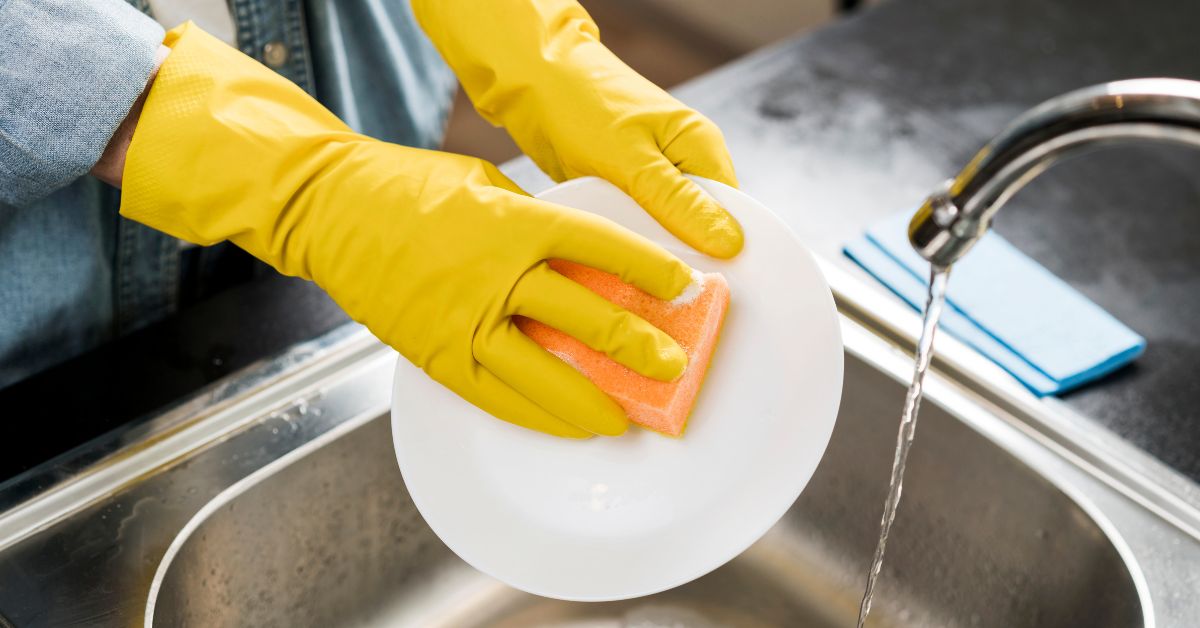
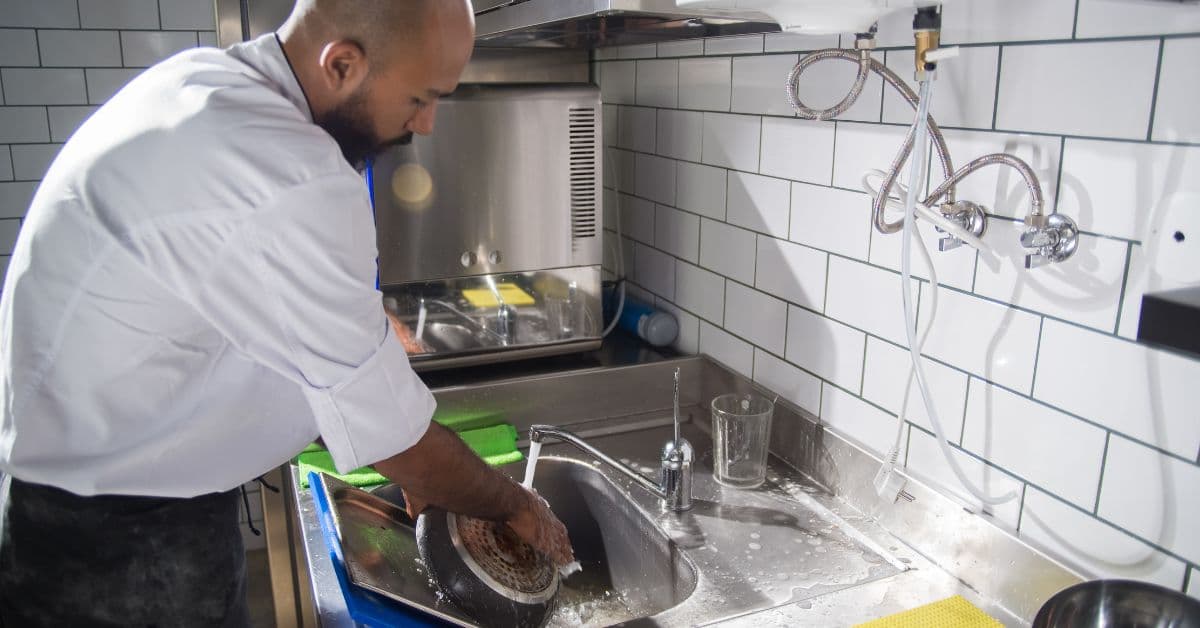
However, not everything can go through a machine. Learning how to wash dishes by hand is essential for delicate items like fine glassware sets and chef's knives that could be damaged from the machine-washing process, or large pots and pans that don't fit. For these situations, the three-compartment sink method remains the gold standard. Mastering how to wash dishes manually ensures you can handle any situation professionally.
Regardless of the method, pre-treatment and quality control are non-negotiable. Staff should always spot-check dishes coming out of the machine or off the drying rack to ensure they are spotless. Investing in your team's training on proper machine operation and hand-washing protocols will pay dividends in efficiency and safety.
Alternative Solutions and Special Circumstances of Dishwashing
A professional kitchen must be prepared for any situation. What happens if you run out of detergent or are operating in a non-traditional setting?
Emergency Dishwashing Solutions
It's essential to know how to wash dishes without dish soap. In an emergency, hot water (above 171°F) can serve as a sanitizer, but it doesn't replace the cleaning power of soap for removing grease. Always have backup cleaning and sanitizing agents that are approved for use in food service.
Mobile and Outdoor Operations
For mobile operations like food trucks or outdoor catering, knowing how to wash dishes while camping or in a remote setup is a critical skill. This often involves a portable three-basin system that mimics the three-compartment sink, using approved water sources and proper wastewater disposal methods.
Another common question that arises in emergencies is, Can you use hand soap to wash dishes? The answer is no. Hand soaps are not formulated to cut through grease and may contain lotions or fragrances that are not food-safe. Stick to products designed specifically for dishwashing. By planning for these special circumstances, you ensure your operation remains compliant and safe, no matter where you are.
Sanitization and Food Safety Requirements for Dishwashing
Sanitization is the final, crucial defense on how to wash dishes against foodborne illness. Using the right sanitizer for dishes at the correct concentration is a core component of your HACCP (Hazard Analysis Critical Control Point) plan.
Types of Sanitization Methods
There are two primary methods of sanitization:
- Hot Water Sanitization: Submerging dishes in water at 171°F (77°C) or higher for at least 30 seconds. This is often handled by high-temperature commercial dishwashers.
- Chemical Sanitization: Using an approved chemical sanitizer (like chlorine, iodine, or quaternary ammonium) mixed to the proper concentration. Staff must regularly test the solution with test strips to ensure it remains effective.
Common contamination risks in the dishwashing area include cross-contamination from dirty to clean dishes and improper chemical handling. Establish clear protocols for storing chemicals away from food and ensure staff wear appropriate protective gear. Documenting sanitizer concentrations and water temperatures is a standard practice that demonstrates due diligence to health inspectors. Your commitment to knowing how to wash dishes safely is a direct reflection of your commitment to your customers' well-being.
Equipment, Supplies, and Operational Efficiency
The right tools are essential for an effective dishwashing operation. Investing in quality, commercial-grade dishware like a durable Plate or coffee cup will withstand the rigors of high-temperature washing and reduce breakage.
Essential Equipment and Supplies
Similarly, a high-quality food container, plastic food container, food storage container, or food storage box designed for professional use ensures both durability and food safety. Consider investing in versatile items like a tiffin for multi-compartment storage needs, or durable glass jar options for various kitchen applications.
Workflow Optimization
Optimizing your workflow is just as important. Arrange your dish pit to create a logical flow from scraping to washing to drying, minimizing staff movement and preventing cross-contamination. Proper storage for clean items like a pitcher, serving tray, or pot is also critical to keep them protected until their next use.
Staffing and Scheduling
Efficient scheduling and clear role definitions during peak hours can transform a chaotic dish pit into a model of efficiency. Cross-training staff ensures coverage during busy periods while maintaining consistent instructions on how to wash dishes.
Elevate Your Standards with Every Dish
Mastering how to wash dishes in a professional environment is not just about cleanliness. Every aspect of how to wash dishes professionally contributes to your operation's success. From adhering to health codes to optimizing workflow, every step contributes to food safety, customer trust, and your restaurant's success. By investing in proper training, reliable equipment, and quality supplies, you empower your team to perform this critical task with confidence and precision.
Explore Premium Ceramic Plates with Oceantableware
For those wishing to upgrade their dining experience, Oceantableware provides a chosen range of ceramic plates that combine quality, durability, and attractive design. Our comprehensive assortment comprises a variety of designs, colors, and finishes, appropriate for any event. Whether you’re looking for simple designs for daily usage or artisanal masterpieces for special occasions, Oceantableware has the ideal Best Plates to fit your requirements.
For further information:
LINE: @oceanonline
Tel.: 062-390-0075
Email: CS@oceanglass.com